Tyres In. Value Out. Every Step of the Way.
Vijaya Durga Polymer Industries operates at the forefront of tyre polymer manufacturing — converting waste tyres into high-value industrial outputs through advanced pyrolysis and recycling processes.
Our operations span three specialised facility types: a synthetic rubber manufacturing plant, a waste-tyre recycling and pyrolysis facility, and a retreading and polymer processing plant — delivering end-to-end solutions across the tyre polymer value chain in Andhra Pradesh and beyond.
At the heart of our operations is pyrolysis — the thermal decomposition of tyres at 350°C–500°C in an oxygen-free environment — which allows us to extract fuel oil, carbon black, steel wire, and combustible gas from every tonne of waste tyre feedstock.
A Tyre Pyrolysis Plant is an industrial facility that converts waste tyres into useful products — fuel oil, carbon black, steel wire, and combustible gas — through thermal decomposition at high temperatures in the absence of oxygen, preventing combustion and unlocking the value locked inside every scrap tyre.
Load Waste Tyres
Sealed into reactor vessel
Heat Reactor
350°C–500°C, no oxygen
Vapour Release
Rubber decomposes into vapours & gas
Condensation
Vapours cooled → pyrolysis oil
Product Recovery
Carbon black, steel & gas collected
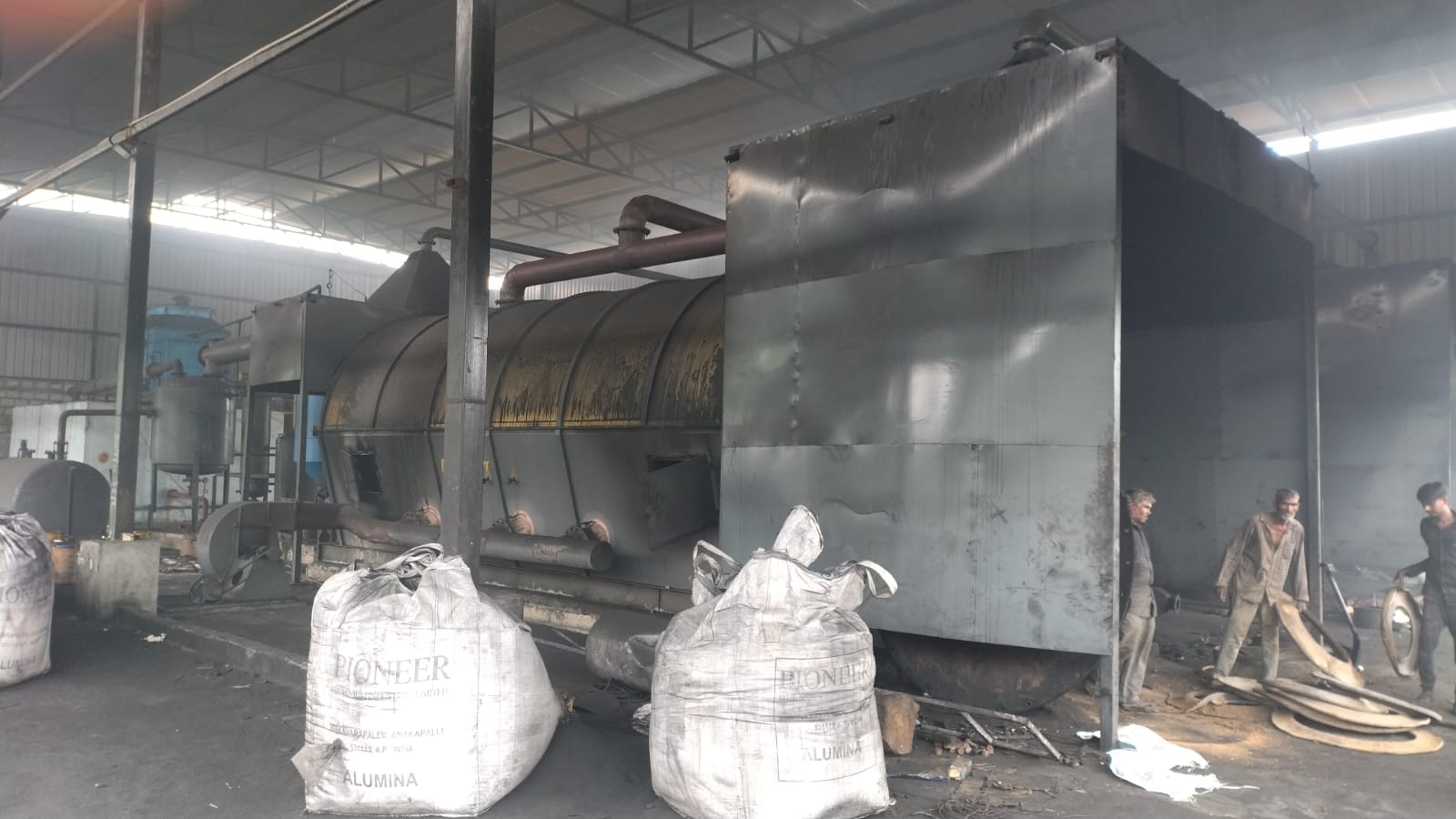
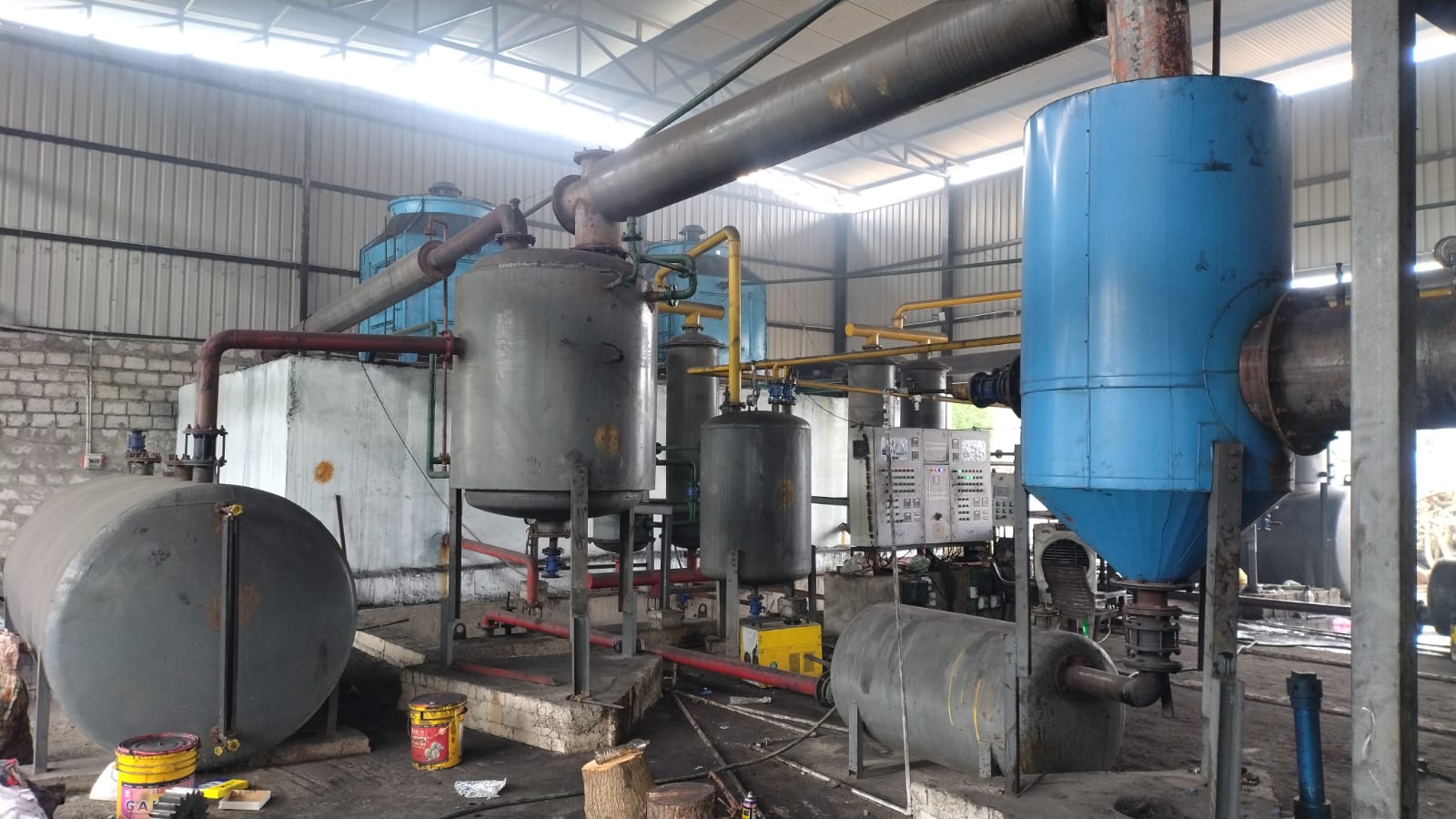
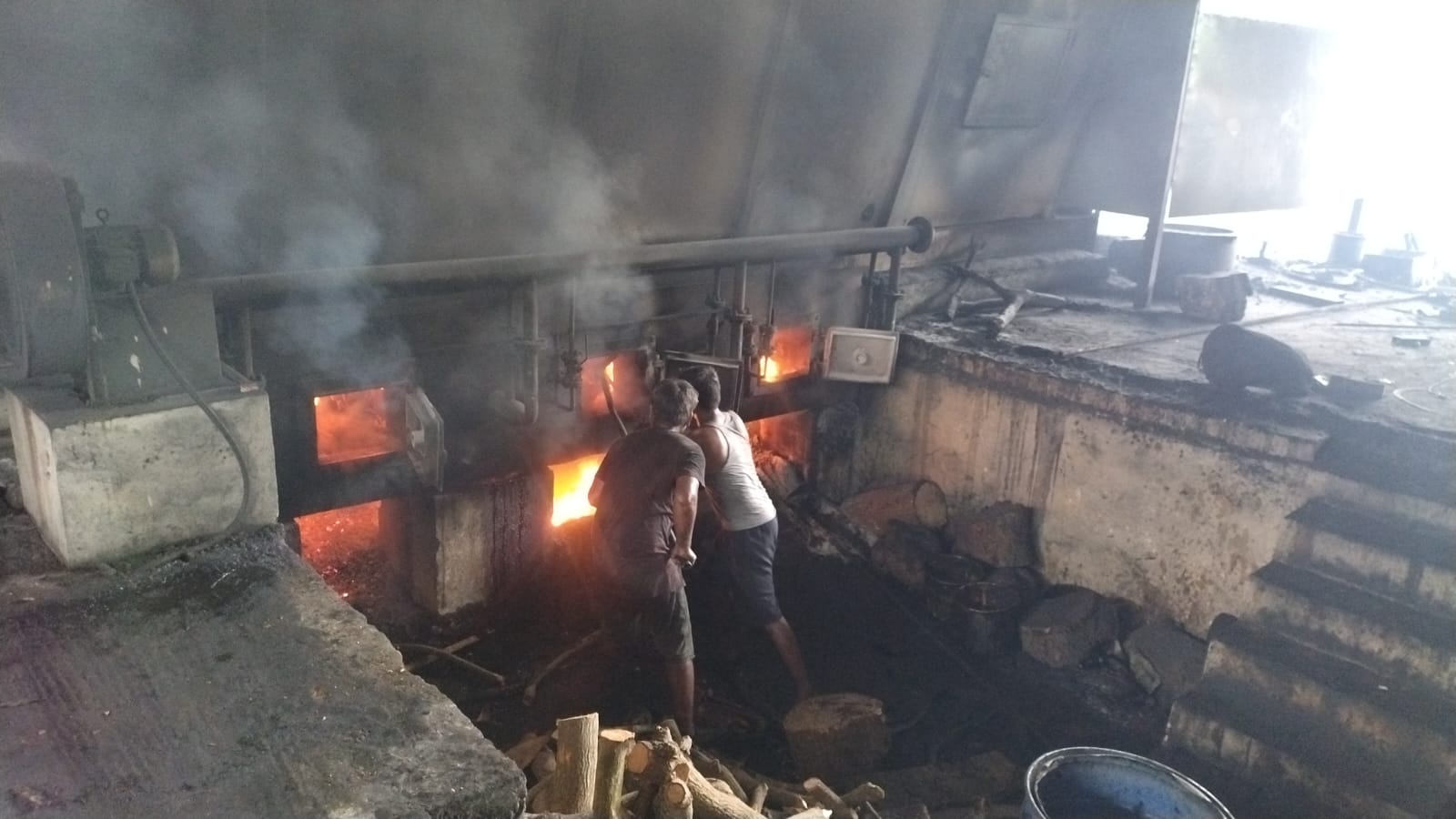
A glimpse into the facilities, equipment, and processes that power Vijaya Durga Polymer Industries.
Eight integrated systems work in sequence to ensure safe, efficient, and pollution-controlled thermal decomposition.
Based on typical industry yields, every 10-tonne batch of waste tyre feedstock produces the following commercial outputs:
| Product | Approximate Quantity | End Use |
|---|---|---|
| Tyre Pyrolysis Oil | 5,000 – 5,500 Litres | Industrial boilers, furnaces, generators |
| Recovered Carbon Black | 4,000 – 4,250 Kg | Rubber fillers, paints, plastics, fuel briquettes |
| Steel Wire | 1,000 – 1,200 Kg | Steel mills, scrap metal recyclers |
| Pyrolysis Gas | 300 – 500 Kg | Reused as reactor heating fuel (self-sustaining) |
High-performance SBR, NBR, and EPDM compounds for tyre and industrial rubber product manufacturing, produced through industrial-scale polymerisation.
Industrial-grade fuel oil derived from waste tyre pyrolysis — 5,000–5,500 litres per 10-tonne batch — suitable for furnaces, generators, and boilers.
rCB extracted from waste tyres at 4,000–4,250 Kg per batch, used as a reinforcing filler in rubber compounds, paints, and plastics manufacturing.
1,000–1,200 Kg of scrap steel recovered per 10-tonne batch from tyre steel belts, supplied to steel mills and metal recyclers.
Retreaded commercial and heavy-vehicle tyres delivering OEM-comparable performance at significantly lower cost for fleets and logistics operators.
Ground rubber granules from tyre recycling used in playground surfaces, athletic tracks, and road construction materials.
Tyre pyrolysis delivers a rare combination — commercial profitability, environmental responsibility, and energy efficiency in one integrated process.
Waste-to-Resource Conversion
Every scrap tyre becomes fuel oil, carbon black, steel, and gas — zero wasted feedstock.
Multiple Revenue Streams
Generates revenue from oil, carbon, steel, and crumb rubber — all from a single process run.
Environmental Protection
Prevents open burning and landfill disposal — the two most damaging disposal methods for used tyres.
Self-Sustaining Energy Use
Pyrolysis gas is recycled back as reactor fuel, reducing external energy costs significantly.
Reduced Fuel Dependence
Pyrolysis oil substitutes conventional fuels in industrial operations, lowering input costs for clients.
Circular Economy Leadership
Supports India's circular economy goals by maximising resource recovery and minimising waste disposal.
Looking for tyre polymer solutions — raw compounds, pyrolysis oil, carbon black, steel recovery, or retreaded tyres? Reach out to discuss your requirements.